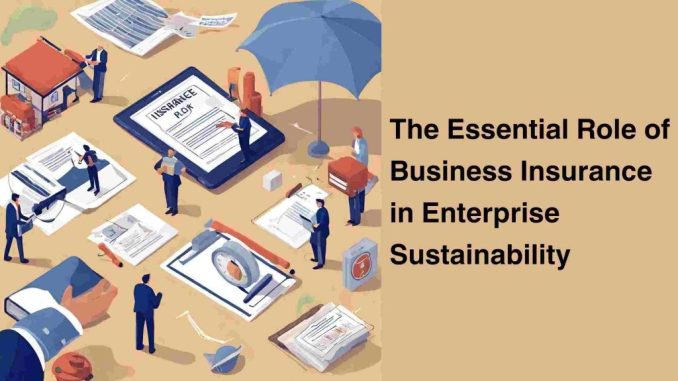
Business growth is often associated with innovation, expansion, and the pursuit of new opportunities. Yet behind every successful enterprise lies a foundation of stability that makes progress possible. Insurance plays a crucial role in creating that stability, acting as a safeguard against risks that could otherwise derail growth. While it is sometimes viewed as a necessary expense or a regulatory requirement, insurance is far more than that. It is a strategic enabler that allows businesses to take bold steps forward with confidence, knowing that they are protected against unforeseen challenges.
At its core, insurance provides a mechanism for managing uncertainty. Every business, regardless of size or industry, faces risks that can disrupt operations or threaten financial health. Accidents, liability claims, property damage, or supply chain interruptions can occur without warning. Without coverage, these events can drain resources and force companies to scale back or even shut down. Insurance absorbs these shocks, ensuring that setbacks remain temporary rather than catastrophic. This ability to stabilize outcomes is what makes insurance indispensable in supporting sustainable growth.
One of the most direct ways insurance contributes to business growth is by protecting assets. Companies invest heavily in property, equipment, and technology, and these assets form the backbone of operations. Damage or loss can compromise productivity and stall expansion plans. Property insurance ensures that businesses can repair or replace what is lost, preserving the foundation upon which growth is built. By safeguarding investments, insurance allows companies to continue building toward their ambitions without being derailed by unforeseen events.
Liability coverage is equally important in enabling growth. As businesses expand, they interact with more customers, partners, and regulators, increasing the potential for disputes or claims. A single lawsuit can drain resources and damage reputation, undermining years of effort. Liability insurance provides the financial support needed to address these challenges, ensuring that companies can withstand legal pressures without collapsing. This protection fosters trust among stakeholders, reinforcing credibility and opening doors to new opportunities.
Insurance also plays a vital role in supporting human capital, which is often the most valuable resource in any organization. Employee benefits, health coverage, and workers’ compensation ensure that teams remain supported even when challenges arise. A workforce that feels secure is more likely to be loyal, motivated, and productive. This stability strengthens the organization’s ability to grow, as employees are empowered to focus on innovation and performance rather than worrying about personal risks. Insurance, in this sense, becomes a tool for cultivating resilience within the workforce.
The psychological impact of insurance should not be underestimated in the context of business growth. Uncertainty often creates stress and hesitation, which can limit ambition and cloud judgment. Knowing that coverage exists alleviates this burden, fostering confidence in decision-making. Leaders can pursue bold strategies, investors can back innovative ideas, and teams can embrace challenges without being paralyzed by fear of loss. Insurance provides peace of mind, turning risk into something manageable and empowering businesses to embrace opportunities despite uncertainty.
Insurance also encourages responsibility by incentivizing safer practices. Premiums often reflect risk levels, motivating companies to adopt stronger protocols, improve safety standards, and reduce exposure. These actions not only lower the likelihood of claims but also strengthen resilience overall. In this way, insurance is not just reactive but proactive, shaping habits that minimize risks before they materialize. This proactive influence reinforces stability, allowing businesses to pursue ambitious goals without unnecessary setbacks.
Adaptability enhances the role of insurance in business growth. Policies can be tailored to fit specific needs, ensuring that coverage aligns with the unique circumstances of each enterprise. A technology startup may prioritize cyber liability protection, while a manufacturing company may focus on property and equipment coverage. As businesses evolve, insurance can be adjusted to reflect new priorities. This flexibility ensures that protection remains relevant, reinforcing the sense of control that stability requires.
Technology has amplified the effectiveness of insurance in recent years, making it an even greater asset for growth. Digital platforms simplify access, management, and understanding of policies. Entrepreneurs can file claims instantly, track coverage, and receive updates in real time. This transparency reduces uncertainty and builds trust, ensuring that insurance feels integrated into everyday operations rather than a distant obligation. In fast-moving ventures, convenience and clarity are essential, and technology ensures that insurance delivers both.
Insurance also contributes to broader economic resilience, which indirectly supports business growth. By pooling risk across industries and communities, insurers prevent financial shocks from overwhelming societies. This collective stability fosters recovery after crises and creates an environment where businesses can thrive. Entrepreneurs benefit from operating in economies where insurance supports confidence, reinforcing the idea that coverage is not just a personal safeguard but a societal stabilizer.
The link between insurance and long-term planning is particularly strong. Growth is not only about immediate expansion but also about continuity across generations. Life insurance and related products ensure that families and dependents are financially secure, while business coverage protects against disruptions that could erode progress. These considerations allow entrepreneurs to plan with clarity, confident that their efforts will not be undone by unexpected challenges. Insurance provides the continuity needed to sustain resilience over time.
Ultimately, insurance empowers businesses to grow more boldly. It reduces the weight of uncertainty, allowing leaders to take risks, innovate, and expand without constant fear of financial ruin. Peace of mind is not just about avoiding stress; it is about creating the freedom to focus on what truly matters—growth, innovation, and impact. Insurance provides that freedom, transforming risk into resilience and instability into stability.
In the end, the importance of insurance in business growth lies in its ability to safeguard assets, support employees, manage liabilities, and foster trust. It enables bold decisions, encourages responsible practices, and ensures continuity in times of disruption. By viewing insurance as more than a requirement, businesses can appreciate its role as a cornerstone of resilience and prosperity. It is not simply about covering risks but about shaping a future where growth can be pursued with clarity, confidence, and strength.