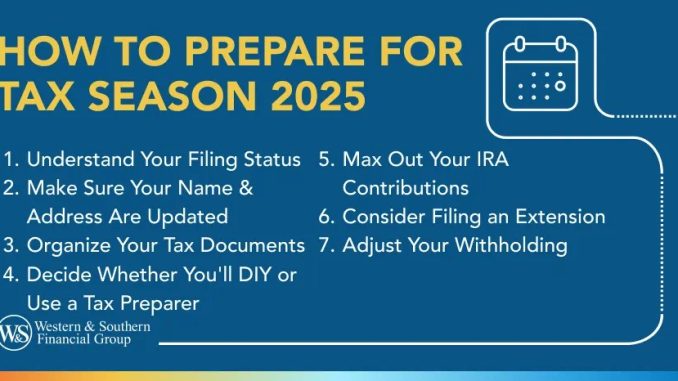
For many individuals and businesses in Singapore, the phrase “tax season” often conjures images of last-minute scrambles, stacks of receipts, and a nagging sense of anxiety. While the Inland Revenue Authority of Singapore (IRAS) has streamlined the tax filing process significantly, particularly with pre-filled information and the No-Filing Service (NFS) for many taxpayers, proactive preparation remains the ultimate strategy for a smooth, stress-free experience. Far from being a chore to be dreaded, preparing for tax season can become an empowering annual exercise that ensures compliance, maximizes legitimate reliefs, and even offers valuable insights into your financial health.
The cornerstone of effective tax season preparation is meticulous record-keeping throughout the year. This cannot be overstated. Waiting until March or April to gather all your financial documents is a recipe for stress and potential errors. Instead, adopt a habit of organizing your income and expense records as they occur. For salaried employees, this might involve simply ensuring your Form IR8A from your employer is accurate (especially if your employer participates in the Auto-Inclusion Scheme, AIS, where income data is automatically transmitted to IRAS). However, for self-employed individuals, freelancers, or those with other income sources like rental properties, this becomes even more critical. Maintain clear, digital or physical files for all invoices, receipts, bank statements showing business transactions, and any other supporting documents for income earned and expenses incurred. The IRAS typically requires records to be kept for at least five years, so establish a system that allows for easy retrieval if needed for verification. This ongoing organization transforms tax season from a chaotic hunt into a straightforward review.
Once your records are in order, the next crucial step is to understand your tax obligations and income sources. Not everyone needs to file a tax return in Singapore. If your annual income is below S$22,000 and you haven’t received a filing notification from IRAS, you might be on the No-Filing Service (NFS), meaning your taxes are automatically assessed. However, even if you’re on NFS, it’s prudent to log into the myTax Portal (using your Singpass) when the filing season opens (typically March 1st) to verify the pre-filled information from your employer and other relevant organizations. If you’ve received a filing invitation, or if you are self-employed, own rental properties, or have other sources of income, you are required to file. For self-employed individuals, it’s vital to report business income accurately, separating personal expenses from legitimate business deductions, and preparing a simple Profit and Loss account. Knowing if and what you need to file is the bedrock upon which all other preparation rests.
A key aspect of responsible tax preparation is to identify and maximize eligible tax reliefs and deductions. Singapore’s tax system offers various reliefs designed to support specific life stages and contributions. These can significantly reduce your taxable income, thereby lowering your overall tax bill. Common reliefs include:
CPF Relief: Contributions to your CPF accounts, including voluntary cash top-ups to your Special Account (SA) or Retirement Account (RA), are eligible for relief.
Earned Income Relief: A basic relief for all individuals with earned income.
Parent/Spouse/Child Relief: For individuals who support eligible dependents.
Course Fees Relief: For fees incurred on approved courses relevant to your profession or future employment, up to a certain cap.
Life Insurance Relief: For premiums paid on life insurance policies, subject to certain conditions.
Donations Relief: For cash donations to approved Institutions of a Public Character (IPCs) – notably, these receive a 250% tax deduction, offering substantial savings.
For self-employed individuals, understanding allowable business expenses is paramount. These can include office rent, utilities, marketing costs, professional training, and work-related travel. Regularly reviewing your eligibility for these reliefs throughout the year, rather than just at tax time, allows you to plan your financial activities strategically. For instance, making a voluntary CPF top-up or a donation to an IPC by December 31st of the preceding year can directly impact the tax assessment for the current Year of Assessment.
Beyond documentation and understanding reliefs, leveraging IRAS’s digital services is a cornerstone of efficient preparation. The myTax Portal, accessible via Singpass, is designed for user-friendliness. It allows you to:
Review pre-filled income and relief information.
Update any additional income not auto-included.
Claim eligible reliefs and deductions.
Submit your tax return electronically.
Check your Notice of Assessment (NOA) and payment details.
E-filing (due by April 18th, while paper filing is April 15th) is not only convenient but also provides instant acknowledgement of submission. Familiarize yourself with the portal well before the deadline to avoid last-minute technical glitches or navigational challenges.
Finally, adopting a proactive mindset is the overarching strategy for tax season. Instead of viewing it as an unavoidable burden, see it as an opportunity to review your financial year, ensure compliance, and optimize your tax position. If your financial situation is complex—perhaps you have multiple income streams, foreign-sourced income, or significant investments—consider consulting a qualified tax professional. Their expertise can help you navigate intricate regulations, identify lesser-known reliefs, and ensure accurate filing, ultimately saving you time, stress, and potentially money in the long run. By making tax preparation an ongoing, organized process rather than an annual panic, you transform it into a valuable component of sound financial management, empowering you to approach each tax season with confidence and clarity.