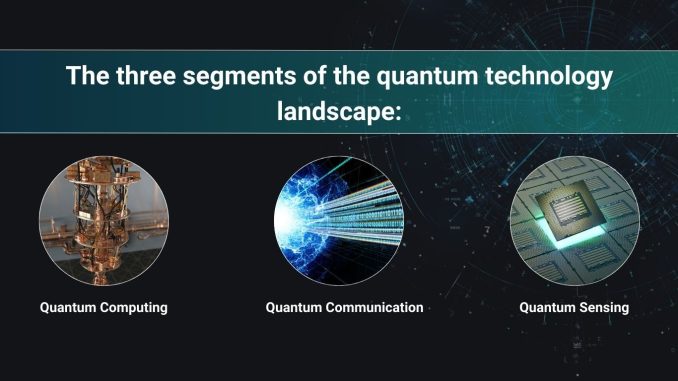
Quantum sensing is emerging as one of the most promising frontiers in technology, offering unprecedented precision in measuring physical quantities such as time, gravity, magnetic fields, and acceleration. Unlike classical sensors, which rely on conventional physics, quantum sensors exploit the principles of quantum mechanics, including superposition and entanglement, to achieve levels of sensitivity that were previously unattainable. This leap in capability is not just a scientific curiosity; it has profound implications for industries ranging from healthcare and defense to telecommunications and transportation.
At the heart of quantum sensing is the ability to detect minute changes in the environment with extraordinary accuracy. Traditional sensors often face limitations due to noise, interference, or the fundamental constraints of classical physics. Quantum sensors, however, can measure variations at the atomic or subatomic level, enabling insights that were once beyond reach. This precision opens the door to applications that demand reliability and accuracy, such as navigation in environments where GPS signals are unavailable or monitoring subtle changes in biological systems for medical diagnostics.
One of the most compelling applications lies in navigation and positioning. Current systems rely heavily on GPS, which can be disrupted or unavailable in certain environments, such as underwater, underground, or in areas with signal interference. Quantum sensors, particularly quantum accelerometers and gyroscopes, can provide navigation capabilities independent of external signals. This advancement could revolutionize industries like shipping, aviation, and defense, where reliable positioning is critical. The ability to navigate with quantum precision ensures resilience in scenarios where traditional systems fall short.
Healthcare is another area poised to benefit significantly from quantum sensing. Medical imaging technologies, while advanced, still face challenges in resolution and accuracy. Quantum sensors can detect extremely subtle changes in magnetic or electric fields, potentially leading to breakthroughs in imaging techniques that reveal biological processes at unprecedented detail. This capability could improve early diagnosis of diseases, enhance monitoring of neurological activity, and support the development of personalized treatments. By providing clinicians with more accurate data, quantum sensing could transform patient care and outcomes.
In the energy sector, quantum sensing offers tools for exploring natural resources and monitoring infrastructure. Detecting variations in gravitational fields, for instance, can reveal underground structures, enabling more efficient exploration of oil, gas, or minerals. Similarly, quantum sensors can monitor pipelines, power grids, and other critical infrastructure with heightened sensitivity, identifying issues before they escalate into failures. This proactive approach enhances safety, reduces costs, and supports sustainability by optimizing resource management.
Telecommunications and information technology also stand to gain from quantum sensing. As networks become more complex and data transmission demands increase, maintaining stability and minimizing interference are critical. Quantum sensors can provide ultra-precise timing and synchronization, ensuring that systems operate seamlessly even under heavy loads. This precision is particularly important for emerging technologies such as 5G and beyond, where latency and reliability are paramount. By integrating quantum sensing into communication networks, businesses can deliver faster, more dependable services.
Defense and security applications highlight the strategic importance of quantum sensing. Detecting submarines, monitoring borders, or identifying hidden threats often requires capabilities beyond the reach of conventional sensors. Quantum technologies can provide enhanced situational awareness, offering military and security organizations tools to operate effectively in complex environments. The ability to detect minute signals or changes in the environment can give a decisive advantage, reinforcing the role of quantum sensing as a critical component of national security strategies.
The role of quantum sensing in scientific research cannot be overlooked. Fundamental discoveries in physics, chemistry, and biology often depend on the ability to measure phenomena with extreme precision. Quantum sensors enable researchers to probe the universe at scales previously inaccessible, deepening our understanding of natural laws and opening pathways to new technologies. From studying gravitational waves to exploring quantum materials, these sensors are expanding the boundaries of knowledge and fueling innovation across disciplines.
Despite its promise, quantum sensing is not without challenges. Developing practical, scalable devices requires overcoming technical hurdles related to stability, cost, and integration with existing systems. Quantum sensors are often sensitive to environmental factors, making them difficult to deploy outside controlled laboratory settings. However, ongoing research and investment are steadily addressing these issues, with prototypes already demonstrating real-world viability. As these technologies mature, their adoption across industries is expected to accelerate.
The business implications of quantum sensing are significant. Companies that harness these technologies can gain competitive advantages by offering products and services with superior accuracy, reliability, and efficiency. Early adopters may redefine standards in their industries, setting new benchmarks for performance. At the same time, the rise of quantum sensing will likely spur new markets and business models, as organizations explore applications that were previously impractical or impossible. The potential for disruption is immense, making quantum sensing a strategic priority for forward-looking enterprises.
Collaboration between academia, industry, and government will be essential in realizing the full potential of quantum sensing. Research institutions provide the foundational science, while businesses drive commercialization and governments support strategic initiatives. This ecosystem ensures that quantum sensing advances not only as a scientific achievement but also as a practical tool for solving real-world problems. By fostering partnerships, stakeholders can accelerate innovation and ensure that the benefits of quantum sensing are widely accessible.
Looking ahead, the role of quantum sensing in technology will continue to expand as devices become more robust, affordable, and integrated into everyday systems. Its impact will be felt across sectors, from improving healthcare outcomes and enhancing energy efficiency to strengthening national security and enabling new scientific discoveries. The journey is still in its early stages, but the trajectory is clear: quantum sensing is poised to become a cornerstone of technological progress in the coming decades.
Ultimately, quantum sensing represents a paradigm shift in how we measure and interact with the world. By harnessing the principles of quantum mechanics, it offers capabilities that redefine the limits of precision and reliability. For businesses, governments, and researchers alike, the challenge is not whether to embrace quantum sensing but how to integrate it effectively into strategies and operations. As this technology continues to evolve, its role in shaping the future of innovation will be both profound and enduring.