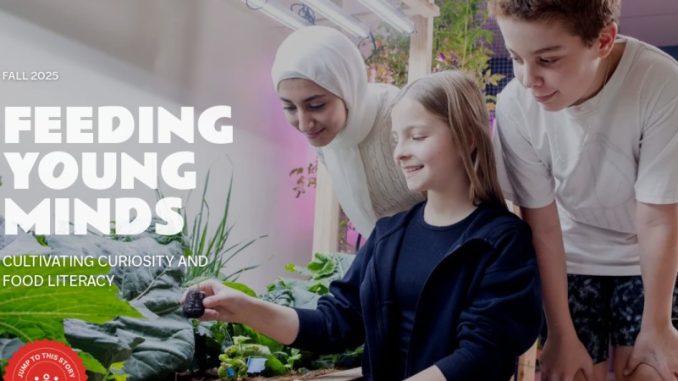
Curiosity is the spark that ignites lifelong learning, and in young minds, it’s both abundant and fragile. Children are naturally inclined to ask questions, explore their surroundings, and challenge what they see. But without the right environment, that spark can dim. Cultivating curiosity is not about teaching children to be interested—it’s about preserving and nurturing the interest they already possess. In educational settings and at home, the way adults respond to questions, structure learning, and model behavior plays a critical role in shaping how curiosity evolves. When curiosity is encouraged, children become more engaged, resilient, and capable of navigating complexity with confidence.
The foundation of curiosity lies in the freedom to wonder. Young learners thrive when they feel safe to ask questions without fear of judgment or dismissal. A child who asks why the sky is blue or how birds fly isn’t just seeking facts—they’re expressing a desire to understand the world. When adults respond with enthusiasm, follow-up questions, or even shared exploration, they validate that desire. This validation reinforces the idea that questions are valuable and that learning is a collaborative process. In contrast, when questions are brushed aside or met with impatience, children may begin to internalize the belief that curiosity is inconvenient or unwelcome.
Creating environments that support curiosity requires intentional design. Classrooms and homes filled with diverse materials, open-ended activities, and opportunities for experimentation invite exploration. A science corner with magnifying glasses, natural specimens, and simple tools encourages children to observe and investigate. Similarly, a reading nook with books on varied topics allows children to pursue interests and discover new ones. These spaces don’t need to be elaborate—they need to be accessible and responsive. When children can interact with their environment in meaningful ways, they begin to see learning as a journey rather than a task.
Curiosity also thrives on relevance. When children see connections between what they’re learning and their own lives, they’re more likely to engage deeply. A math lesson that involves measuring ingredients for a recipe or calculating distances on a map becomes more than an abstract exercise—it becomes a tool for understanding the world. Educators and parents who contextualize learning help children see its purpose, which fuels motivation. This relevance doesn’t just make learning more enjoyable—it makes it more memorable. When children care about what they’re learning, they’re more likely to retain and apply it.
Modeling curiosity is another powerful strategy. Adults who ask questions, express wonder, and pursue new interests demonstrate that learning is a lifelong endeavor. A parent who wonders aloud about how a plant grows or a teacher who shares their excitement about a historical mystery shows children that curiosity isn’t something you outgrow. These moments of shared inquiry create a culture of learning that is dynamic and inclusive. They also remind children that it’s okay not to have all the answers—that the process of discovery is just as important as the outcome.
Technology, when used thoughtfully, can support curiosity by providing access to information, tools, and communities. Digital platforms that allow children to explore topics, conduct virtual experiments, or connect with experts can expand their horizons. However, the key is intentionality. Technology should be a gateway to exploration, not a substitute for it. A child who uses a tablet to research animal habitats and then builds a model ecosystem is engaging in layered, meaningful learning. The digital experience becomes a springboard for hands-on inquiry, reinforcing the idea that curiosity leads to creation.
Curiosity also benefits from reflection. When children are encouraged to think about what they’ve learned, how they’ve learned it, and what they still wonder about, they develop metacognitive skills. These skills help them become more strategic and self-aware learners. A classroom that ends the day with a “wonder wall” where students post questions or observations fosters a habit of reflection and inquiry. Over time, children begin to see themselves as active participants in their education, capable of directing their own learning and pursuing their own interests.
Importantly, cultivating curiosity supports emotional development. Curious children are more likely to be open-minded, empathetic, and resilient. They approach new situations with interest rather than fear, and they’re more willing to engage with diverse perspectives. This openness is essential in a world that values collaboration and innovation. When children learn to ask questions, listen to others, and explore ideas, they build the foundation for thoughtful citizenship and adaptive leadership.
In business and education alike, curiosity is increasingly recognized as a driver of innovation and growth. Organizations that foster curiosity among employees see greater engagement, creativity, and problem-solving. Similarly, schools that prioritize inquiry-based learning produce students who are better prepared to navigate uncertainty and complexity. Cultivating curiosity in young minds is not just an educational imperative—it’s a strategic investment in the future. It ensures that the next generation is equipped not just with knowledge, but with the mindset to seek, question, and evolve.
Ultimately, curiosity is not a trait to be taught—it’s a flame to be tended. It requires attention, encouragement, and trust. When adults create environments that honor questions, celebrate exploration, and model wonder, they help children build a relationship with learning that lasts a lifetime. And in that relationship, the possibilities are endless.