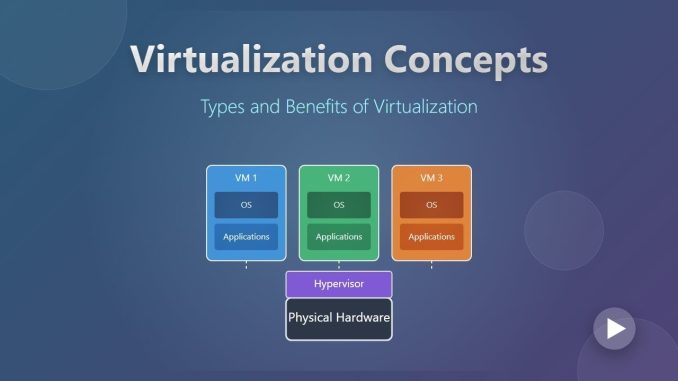
Virtualization has become one of the most transformative developments in modern IT infrastructure, reshaping how organizations manage resources, deploy applications, and scale operations. By abstracting physical hardware into virtual environments, businesses have unlocked new levels of flexibility and efficiency that were once unimaginable. This shift has not only streamlined technical processes but also redefined the strategic role of IT in driving business growth and innovation.
At its core, virtualization allows multiple operating systems and applications to run on a single physical machine, each within its own isolated environment. This capability reduces the need for dedicated hardware, cutting costs and simplifying management. Instead of maintaining dozens of servers for different tasks, companies can consolidate workloads onto fewer machines, maximizing utilization and minimizing waste. The result is a leaner, more agile infrastructure that can adapt quickly to changing demands.
The financial impact of virtualization is significant. Hardware acquisition and maintenance have traditionally been major expenses for IT departments, but virtualization reduces these costs by extending the lifespan of existing equipment and lowering the need for new purchases. Energy consumption also decreases, as fewer physical servers mean reduced power and cooling requirements. For organizations under pressure to optimize budgets, these savings are compelling, and they often free up resources for investment in innovation rather than maintenance.
Beyond cost efficiency, virtualization enhances scalability. Businesses can provision new virtual machines in minutes, enabling rapid deployment of applications and services. This agility is particularly valuable in industries where demand fluctuates, such as e-commerce or financial services. IT teams can respond quickly to spikes in traffic or workload without waiting for new hardware installations. The ability to scale up or down seamlessly ensures that infrastructure aligns with business needs in real time.
Virtualization also improves disaster recovery and business continuity strategies. Traditional recovery methods often required complex hardware replication, but virtual environments simplify the process by allowing systems to be backed up and restored more easily. Virtual machines can be replicated across data centers, ensuring that critical applications remain available even in the event of hardware failure or natural disasters. This resilience strengthens organizational confidence and reduces downtime, which is essential in today’s always-on digital economy.
Security is another area where virtualization has had a profound impact. By isolating workloads within separate virtual environments, organizations can contain potential breaches and prevent them from spreading across systems. Virtualization also supports advanced monitoring and management tools that provide greater visibility into infrastructure performance and security. While new risks have emerged, such as vulnerabilities in hypervisors, the overall effect has been to create more controlled and manageable environments.
The rise of cloud computing is closely tied to virtualization. Cloud providers rely heavily on virtualized infrastructure to deliver scalable, on-demand services to customers. For businesses, this means that adopting virtualization internally often serves as a stepping stone to broader cloud strategies. The familiarity with virtual environments makes it easier to transition workloads to public or hybrid clouds, blending internal resources with external services for maximum flexibility.
Virtualization has also changed the role of IT professionals. Instead of focusing primarily on hardware maintenance, teams are now tasked with managing virtual environments, optimizing resource allocation, and ensuring performance across dynamic systems. This shift requires new skills and tools, but it also elevates IT from a support function to a strategic partner in business operations. IT leaders can now focus on innovation, leveraging virtualization to enable faster product development, improved customer experiences, and more efficient operations.
In addition to servers, virtualization has expanded into other areas of IT infrastructure. Network virtualization allows organizations to create flexible, software-defined networks that can be managed centrally and adapted quickly to new requirements. Storage virtualization consolidates resources across multiple devices, simplifying management and improving performance. Together, these advancements create a fully virtualized infrastructure that is more cohesive, efficient, and responsive than traditional models.
Despite its many benefits, virtualization is not without challenges. Managing large-scale virtual environments requires careful planning and robust governance. Resource sprawl, where too many virtual machines are created without oversight, can lead to inefficiencies and increased costs. Performance issues may arise if workloads are not balanced properly across physical hardware. Organizations must invest in monitoring tools and skilled personnel to ensure that virtualization delivers its full potential without introducing new risks.
The cultural impact of virtualization within organizations is also noteworthy. By enabling faster deployment and greater flexibility, virtualization fosters a mindset of agility and experimentation. Teams are more willing to test new ideas, knowing that resources can be provisioned quickly and scaled as needed. This culture of innovation is critical in competitive markets, where the ability to adapt rapidly often determines success.
Looking forward, virtualization will continue to evolve alongside emerging technologies such as containerization and edge computing. Containers build on virtualization principles by offering even lighter, more portable environments for applications, while edge computing extends virtualized resources closer to end users. Together, these trends suggest that virtualization will remain a cornerstone of IT infrastructure, continually adapting to meet the demands of a digital-first world.
Ultimately, the impact of virtualization on IT infrastructure is profound and multifaceted. It has reduced costs, improved scalability, enhanced resilience, and enabled new business models. More importantly, it has shifted the role of IT from a reactive function to a proactive driver of innovation. As organizations continue to embrace virtualization, they are not just modernizing their infrastructure—they are laying the foundation for a more agile, resilient, and forward-looking future.